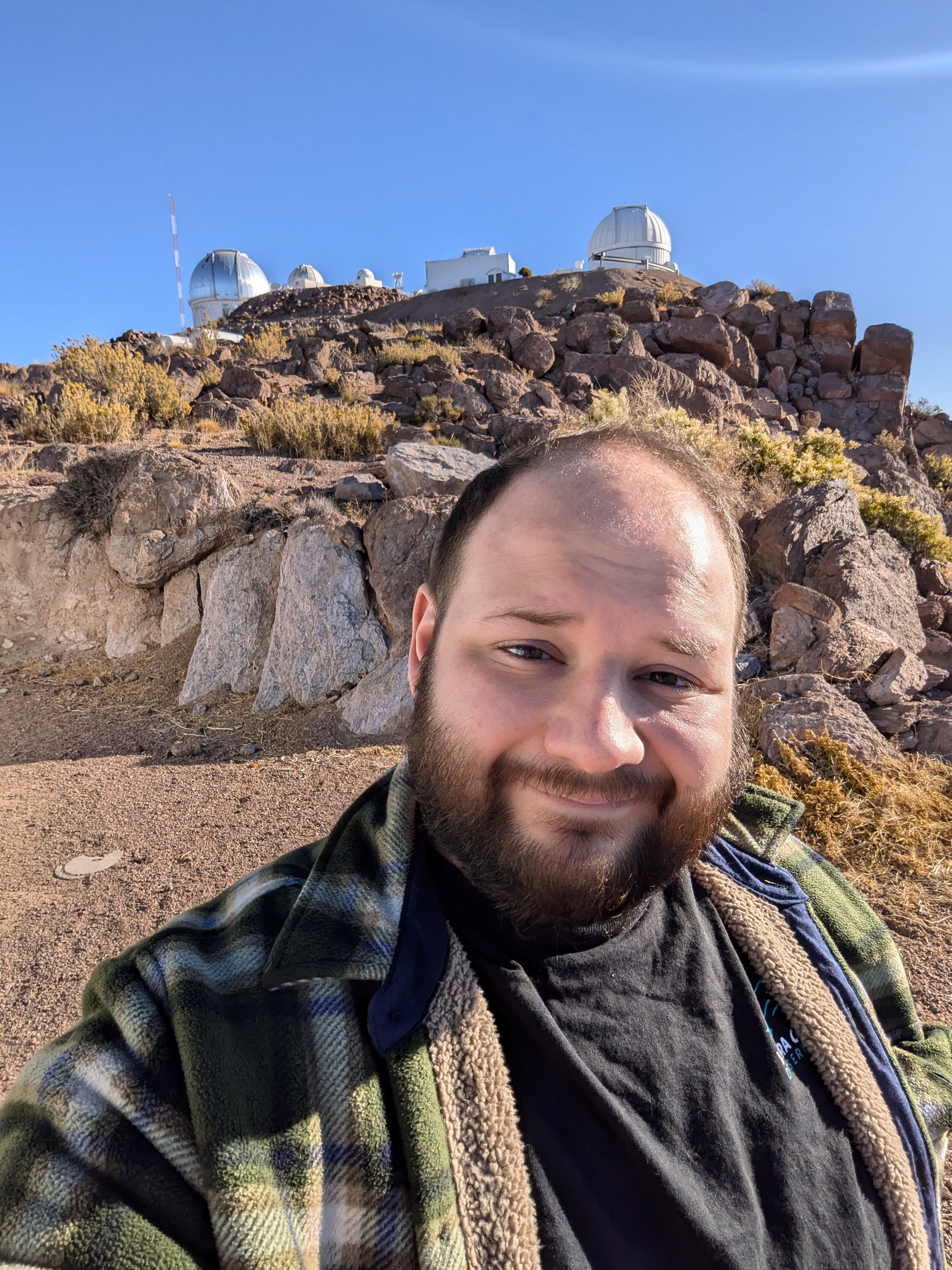
Tololo 2025
Published:
The Cerro Tololo Inter-American Observatory
During May of 2025, I was funded by Brown University and the U.S. National Science Foundation National Optical-Infrared Astronomy Research Laboratory (NOIRLab) to carry out observations in support of my dissertation on-site at the Cerro Tololo Inter-American Observatory (CTIO). Luckily for me, I had just enough space in my luggage to squeeze my DSLR and a tripod; during a free night and between long sequences of exposures, I spent my time exploring the observatory and took advantage of the dark skies.
During my second night, after adjusting to sleeping through the day and waking up in the early-afternoon to carry out calibrations, I had time to explore the observatory. Equipped with my backpack, a tripod, and a pack of milk biscuits, I began wandering the observatory and the sky in search of a good picture.
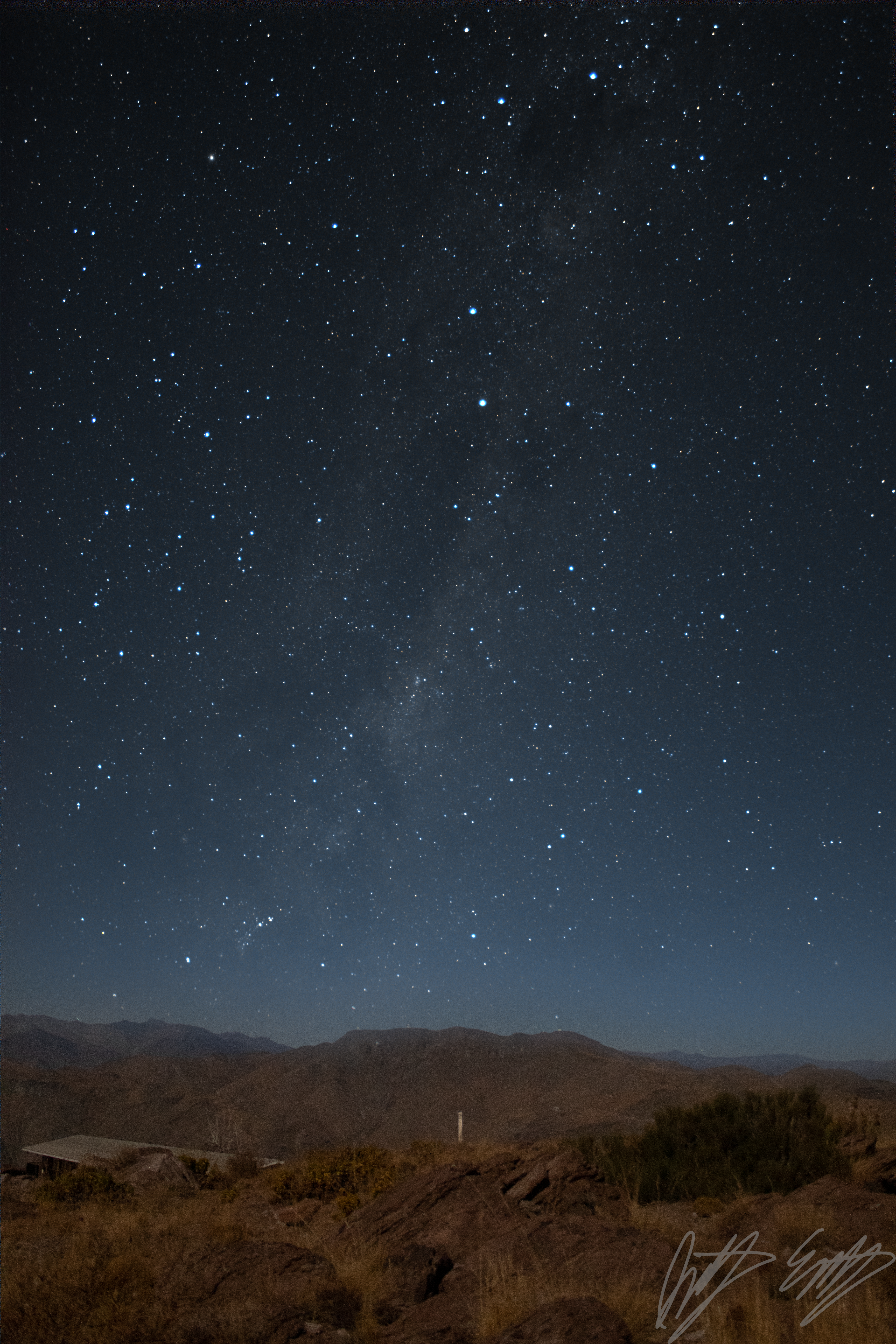
I began by capturing a picture of the Milky-Way over the nearby peak of Cerro Panchon, which hosts several other notable observatories including the newly constructed Vera C. Rubin Observatory, the Gemini South Observatory, and the Southern Astrophysical Research Telescope. These are the tiny white dots on the mountaintop below the Milky Way.
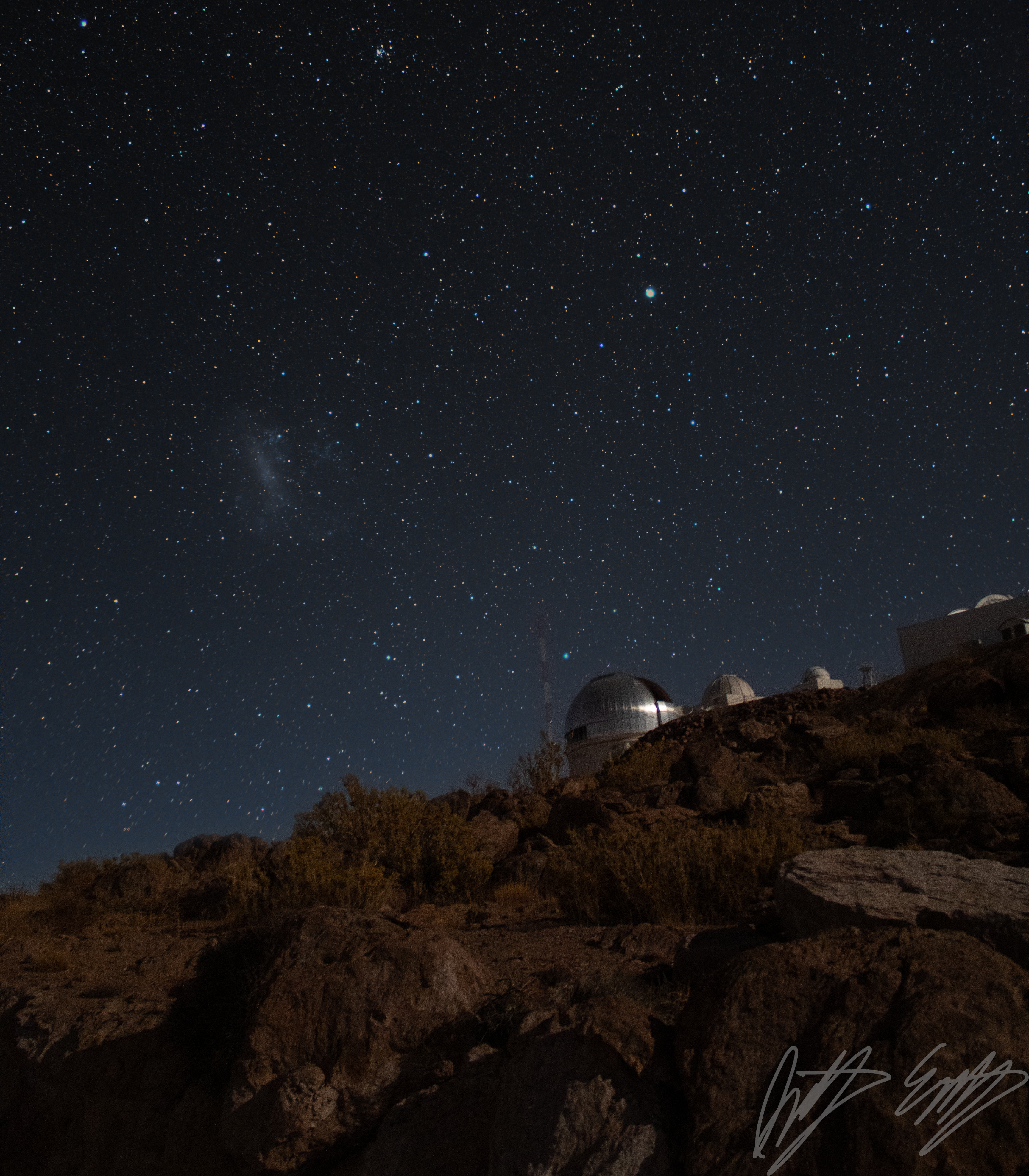
Next, I turned my attention to getting a picture of the Large Magellanic Cloud (LMC), one of the Milky Way’s two satellite galaxies. While capturing both of these images, the night was dark but illuminated by the waxxing moon. This produced bright foregrounds in the final exposures, but also made it challenging to observe the lower surface brightness features present in both LMC and the Milky Way. The largest of the observatories visible here is the Victor M. Blanco Observatory hosting a 4m-telescope.
Picture this: you are alone outside in the night, there are no street-lamps nor city skylines in the background, its just you and the stars. Then, to break the silence, you hear a quiet munch munch munch; is it one of the foxes or small felines scattered across the peak? Nope; its one astronomer standing out there with a tripod and DSLR snacking on his milk biscuits. I can’t help by wonder, if someone was out there with me, what they thought as they heard the quiet munching.
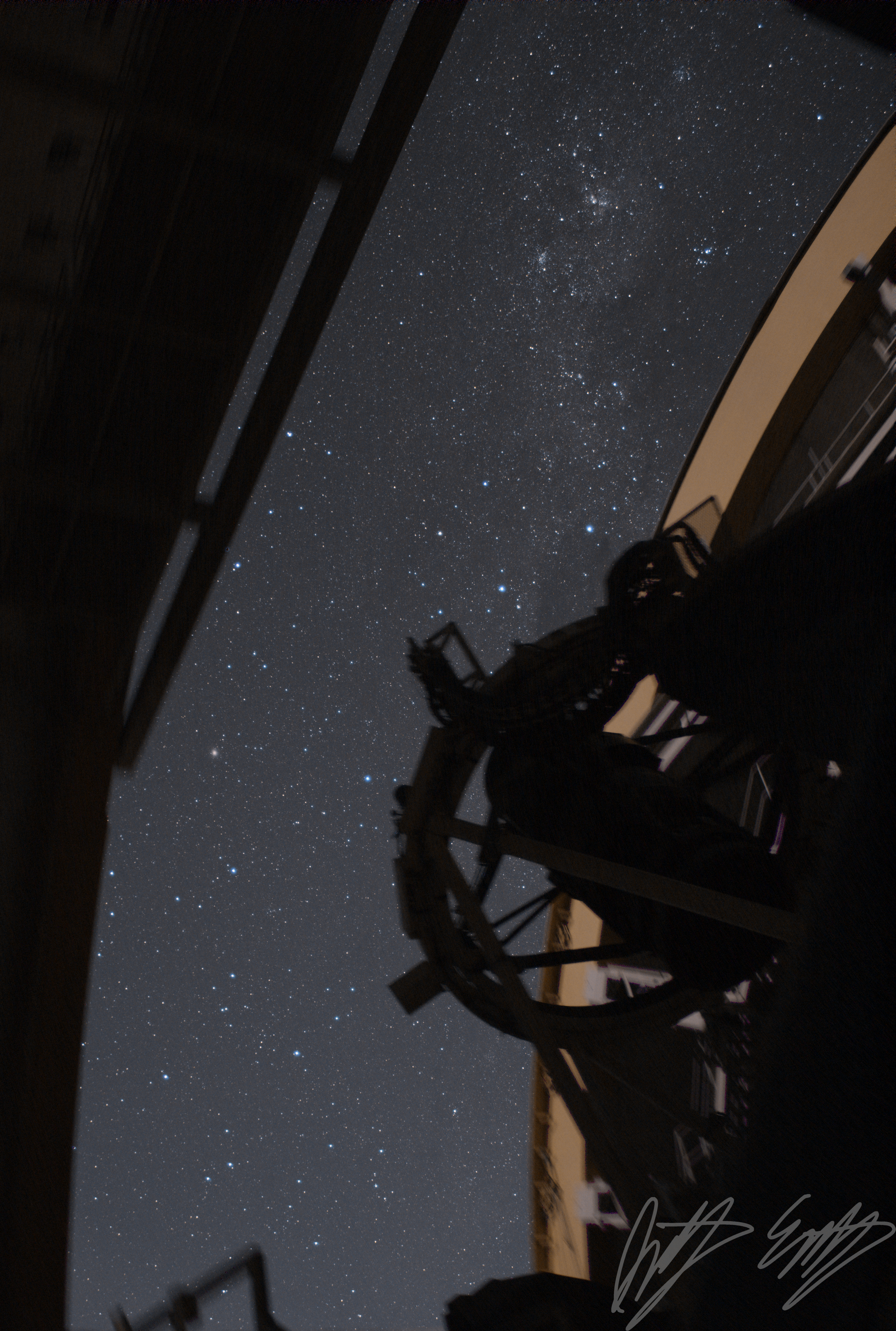
My third image was taken during an observing run prior to “astronomical twilight” (while the sky was too bright for our observations). This was taken inside the telescope’s dome; the instrument I was using for my observations, the Dark Energy Camera, is mounted at the telescope’s primary focus. Like the previous two photos, this was captured while the moon was above the horizon, leading to a brighter sky and less well-defined nebulous features.
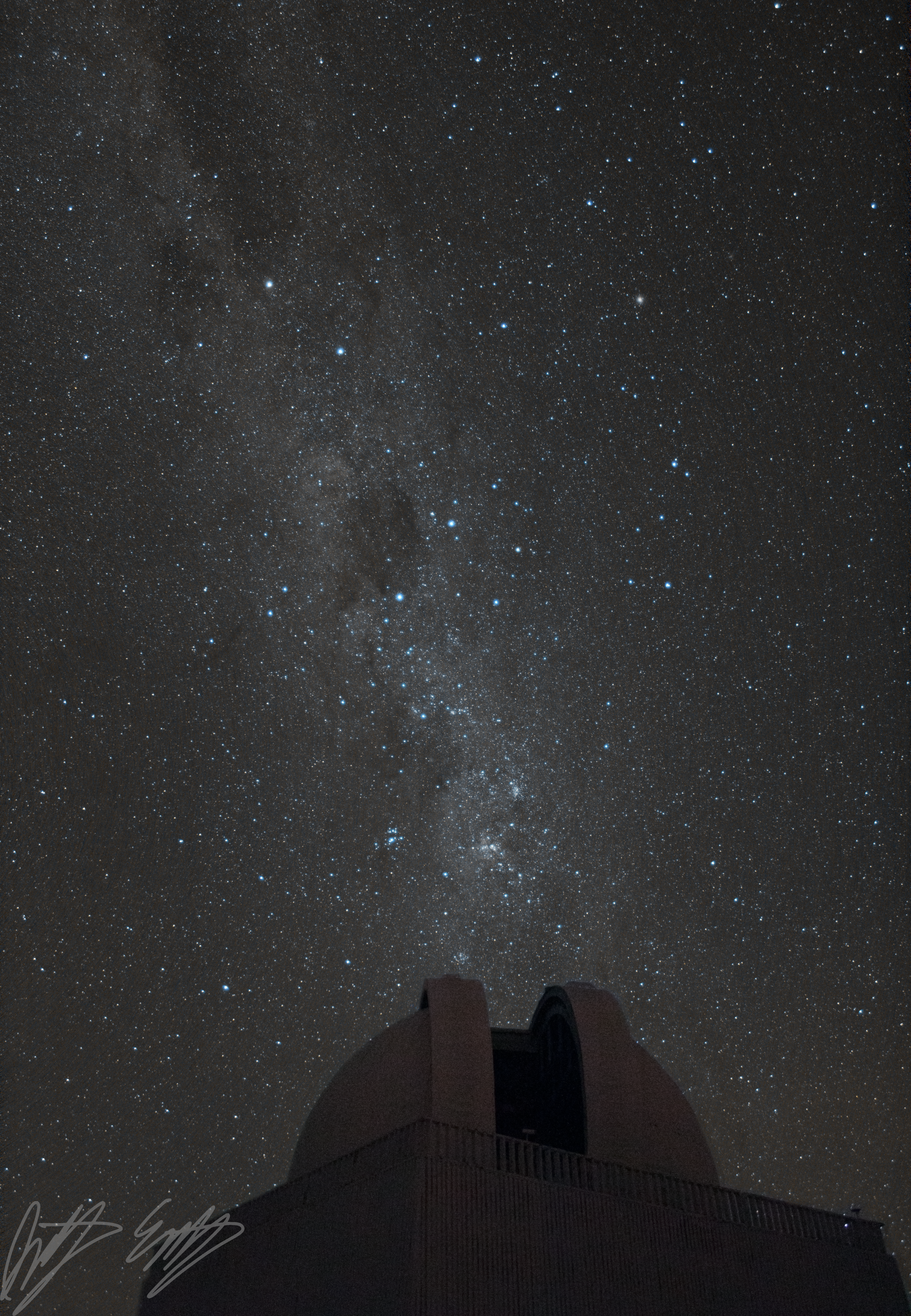
For my final image, I stepped away from the observing console after the moon had set and a long series of exposures had begun. This image shows the Milky Way over the 1.4m SMARTS Telescope. It has nearly the same exposure time as the previous image of the Milky Way over Panchon; the only difference is that the moon was below the horizon. The moon really is that bright for astronomers, due to its ability to increase the average brightness of the night-sky.